
Concept




Satellite-based images

Satellite-based images:
ORBIS will fuse and process multi-sensor satellite imagery from SAR, optical VHR, and thermal infrared sources through a series of advanced data cube and AI models.
The module will employ XCube for data fusion and analysis ready data (ARD) and Enhanced Super-Resolution Generative Adversarial Networks (ESRGAN) for super-resolution processing, enhancing the detail of thermal and SAR imagery.
Heterogeneous data gathering sensors

Heterogeneous data gathering sensors:
Leveraging the existing Payload Management system that allows quick plug-and-play hardware reconfiguration, dedicated sensors (acoustic, GPS receivers, sonars, RGB and IR cameras, radars, antennas, etc.) will be selected to be installed on-board the UAVs, depending on the specific mission needs.
Raw sensor data is both stored and processed locally on-board UAVs and streamed to other drones or cloud servers when needed. Sensors will be classified according to their autonomy and will be used either for constant monitoring or “need to” intervention, annotated with the current position and UAV status information, where relevant (e.g. altitude, speed, etc.).
Navigation and surveillance flight planning
Navigation and surveillance flight planning:
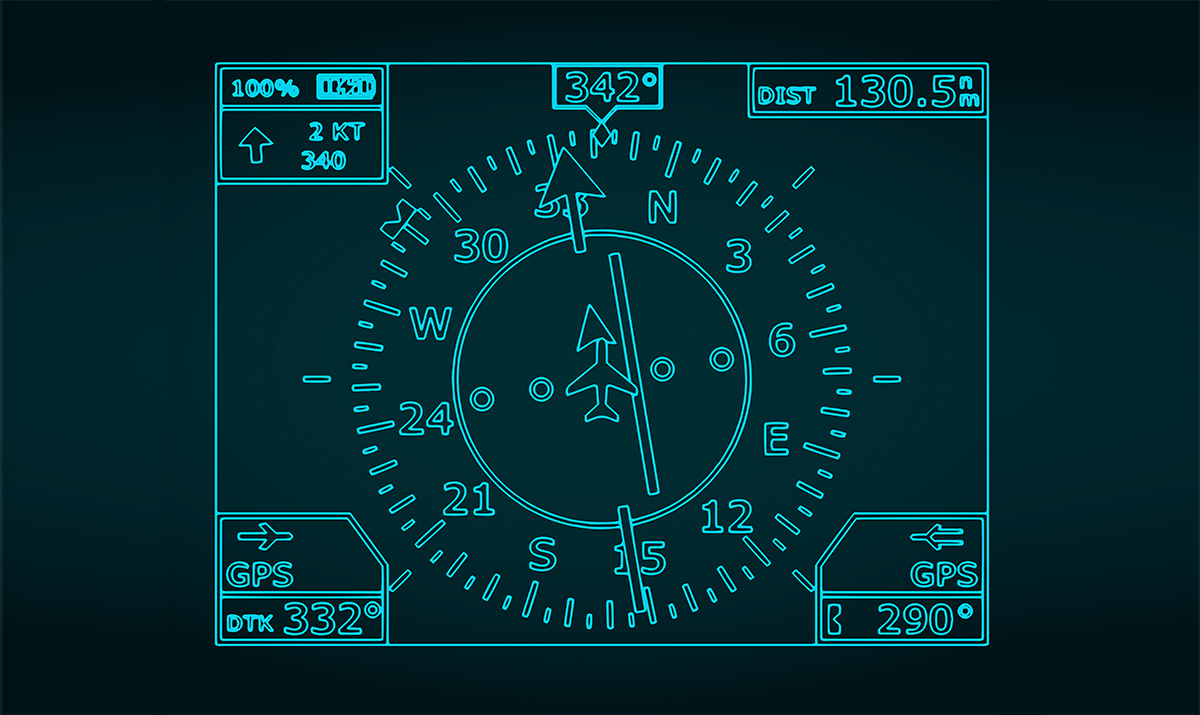
Going beyond existing navigation capabilities, ORBIS will use distributed ML techniques to analyse diverse data from the satellites, the UAVs, and other sources towards recognizing complex patterns in vessel behaviour and environmental conditions, thus enhancing the ability to proactively respond to high-risk scenarios, optimising the navigation / flight plans for the ORBIS UAVs.
As a result, the UAVs will be deployed to cover specific areas, in specific time slots, and in anticipation of specific incidents, thus significantly enhancing surveillance efficiency.
The module will consider the deployment of multiple UAVs to cover a specific area, making it possible to scale up from 1-2 UAVs to swarm approaches.
Geospatial intelligence algorithms

Geospatial intelligence algorithms:
Geospatial intelligence algorithms will fuse satellite and UAV images and employ advanced AI-assisted computer vision to detect maritime anomalies, such as unregistered vessels or unusual movement patterns.
Detected/classified incidents will generate necessary data for improving both navigation and real-time decision making.
Search and Rescue decision making

Search and Rescue decision making:
The results of geospatial intelligence algorithms along with the navigation plans will feed a decision-making module that will manage operator-made rules, together with other data (other sensor data, previous incidents, etc.) to verify detected incidents and generate warnings and notifications to the operator for further action.
Depending on the complexity of the situation (e.g., bad weather conditions, limited visibility, etc.) the decision-making module could be executed on the UAV (lightweight model) or on the cloud.
Secure communications

Secure communications:
Secure and standardised APIs to facilitate seamless, interoperable data exchange across maritime security stakeholders.
These APIs will prioritise data integrity, confidentiality, and real-time adaptability, establishing a trusted digital environment for information sharing that meets critical security requirements and aligning with EMSA’s CISE towards a decentralised, interoperable maritime surveillance network.
ORBIS web platform

ORBIS web platform:
ORBIS will offer an intuitive WebGIS-based dashboard that provides real-time situational awareness for operators.
Through enriched visual analytics, operators can access both satellite and UAV data, as well as outcomes of the navigation and decision-making processes, toggling between them as needed for comprehensive monitoring.
The dashboard will include tools for adjusting thresholds in detection algorithms, setting automated alerts and communication with drones, and interacting with predictive models to anticipate vessel trajectories. Notifications and reports to authorities and drones will be generated automatically and will be accessible on the dashboard, with options to export data or integrate with external systems via secure and standardised APIs.